Safe Package Installation Inside Agent Sandboxes
Multiple layers of isolation and policy controls replace the human judgment that AI agents bypass.
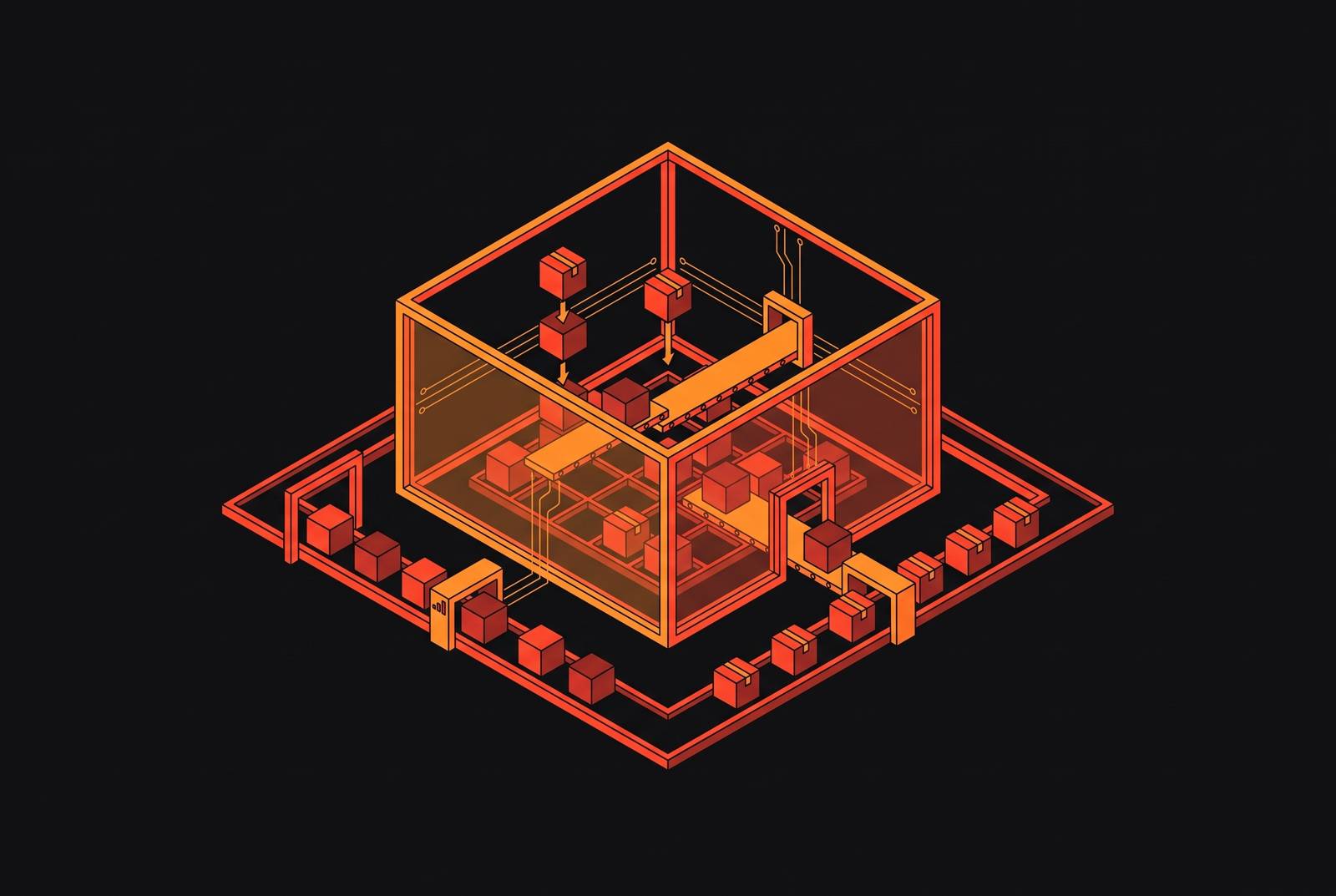
Safe package installation inside agent sandboxes depends on a stack of controls, not a single safeguard: kernel-level isolation, registry restrictions, version pinning, egress enforcement, and audit logging, each layered on the one before it. The reason the stack has to be this deep is structural. AI agents remove the human checkpoints that have quietly caught supply-chain attacks for decades, and no single control can replace what that absence costs.
Agent-driven package installation as a different supply-chain risk
A developer who installs a package passes through a set of checks nobody writes down, because nobody has to. A name looks slightly wrong, a download count looks too low, a maintainer looks unfamiliar, and the install pauses. None of that friction exists when an agent runs the install. An agent reads a package name, reasons about whether it matches the dependency it needs, and executes. It does not pause on a feeling, because it has none.
The absence of that friction is what produces all three failure modes, which are specific to agents rather than to package managers in general: prompt-injection-driven installs are the first, where malicious content embedded in a document, a URL, or a code snippet the agent happens to be processing can instruct it to install an attacker-chosen package, and the agent complies because it cannot distinguish an instruction buried in content from an instruction given by its operator. Unpinned version drift is the third: told to install "the latest version," an agent installs whatever is newest at the moment it runs, including a backdoored payload if a legitimate package has been compromised since the agent's training or since the last human review.
Transitive dependency expansion makes all three worse. A single top-level install can silently pull in dozens of packages that no allowlist, no human reviewer, and no automated scan has ever evaluated, because the review stopped at the name the agent typed and never followed the dependency graph downward. And because an agent that installs dependencies on behalf of users does so repeatedly across many sessions rather than once in a single sitting, the same mistake that a human makes once gets repeated at machine speed, multiplying both the frequency of exposure and the reach of whatever gets pulled in.
The Shai-Hulud worm family showed what this looks like once it moves from theory to incident. It demonstrated that a package install and an agent session are no longer separable attack surfaces. They are the same surface.
Kernel-level isolation as the architectural foundation
Every control that lives in userspace, a container boundary, a denylist, a permission prompt, exists in the same space an agent reasons in. A microVM's isolation does not share that weakness, because it is enforced by hardware rather than by policy sitting next to the thing it is supposed to constrain.
The distinction is concrete at the level of a single install command. The same command run inside a microVM has no such path: Firecracker microVMs give each workload its own kernel, running on hardware virtualization through KVM, so a kernel exploit inside one VM cannot reach the host or any other VM running alongside it. The accepted boundary is a microVM like Firecracker or a hardened user-space kernel like gVisor.
The choice between those two options is not interchangeable once GPUs enter the picture. Any agent workload installing machine learning packages that need CUDA has to run on Firecracker rather than gVisor, because gVisor's user-space kernel intercepts GPU calls at a point that blocks direct PCIe passthrough. The constraint is real in both directions, and it shapes which isolation technology a given agent workload can actually use.
Matchlock, an open-source project built on Firecracker microVMs, makes the underlying logic explicit. It was built for running agents with deny-all network policy by default, explicit host exceptions, and secret protection, designed around the case of running claude --dangerously-skip-permissions without that permissiveness becoming a liability. The project's existence makes a point about architecture rather than about any one product: permissive agent behavior only becomes acceptable once it happens inside a boundary strong enough to contain the consequences. VM isolation is that boundary. It is necessary, but it does not, on its own, decide what the agent is allowed to install, where it can reach on the network, or whether anyone can later tell what happened inside it. Those are separate problems, and each needs its own layer.
How snapshot-restore changes the economics of per-agent VM isolation
The standard objection to putting a full VM around every agent run is latency. An agent's inner loop runs many tool calls per task, and if each one has to wait on a VM cold boot, the architecture that is safest on paper becomes unusable in practice. Snapshot-restore removes that tradeoff by changing what "creating a VM" actually means.
Firecracker's snapshot-restore API boots a microVM to a ready state once, snapshots its memory and block device state to local NVMe, and then restores subsequent sandboxes from that snapshot. A fresh boundary for every execution means no cached credential carries forward, no leftover file persists, and no run inherits state from a previous one. A compromise, if it happens, is a compromise of something that was already about to be discarded.
The billing basis matters as much as the raw speed, because agent workloads are bursty by nature: CPU busy for a few seconds per tool call, idle for the stretch where the model is reasoning about what to do next. The economic lever that makes it viable is billing for storage during the idle periods instead, because a snapshot sitting on NVMe costs far less to hold than a VM's CPU allocation costs to reserve. So a scheduler built around snapshot-and-restore turns that idle majority into what makes per-agent isolation affordable.
Registry controls: allowlists, version pinning, and mirroring as the first policy layer
With the VM boundary established, the next layer is the one a developer actively configures rather than the one the infrastructure provides by default: control over what the agent is allowed to install. The most direct version of that control is an allowlist, and it has to be enforced at the package-manager intercept layer rather than inside the agent's own reasoning, so the agent cannot talk its way around the restriction by reformatting the install command or rephrasing the request.
An allowlist specifies exactly which packages the agent may install, and anything not on the list is blocked regardless of what the agent has been instructed to do. That is the correct default for a production agent with a defined task scope. A blocklist takes the opposite approach, permitting everything except what has been explicitly denied, and it is structurally unsafe for this purpose because it requires correctly anticipating every harmful package in advance, a bar that typosquatting and transitive dependencies make nearly impossible to clear.
Version pinning closes the gap an allowlist alone leaves open. An allowlist entry that reads "numpy, any version" still permits a compromised release; "numpy==2.0.3" does not. Anything the agent needs transitively has to be named in the lockfile, not picked up silently along the way.
Dynamic workflows, where the agent determines install targets at runtime rather than from a fixed manifest, call for a two-phase model. Anything new goes to a human approval queue before it is allowed to install.
Registry mirroring sits alongside pinning and carries more of the actual weight than pinning alone suggests. The split is a production pattern, not a proposal, and it makes a point that applies well beyond Homebrew's own use case: separating the phase where a package is retrieved from the phase where its code executes closes off a window that pinning by version number cannot close on its own. A version number is a label. A cryptographic hash, checked at the mirror, is a guarantee that the artifact installed is byte-for-byte the one that was approved.
Network egress controls as defense-in-depth below the policy layer
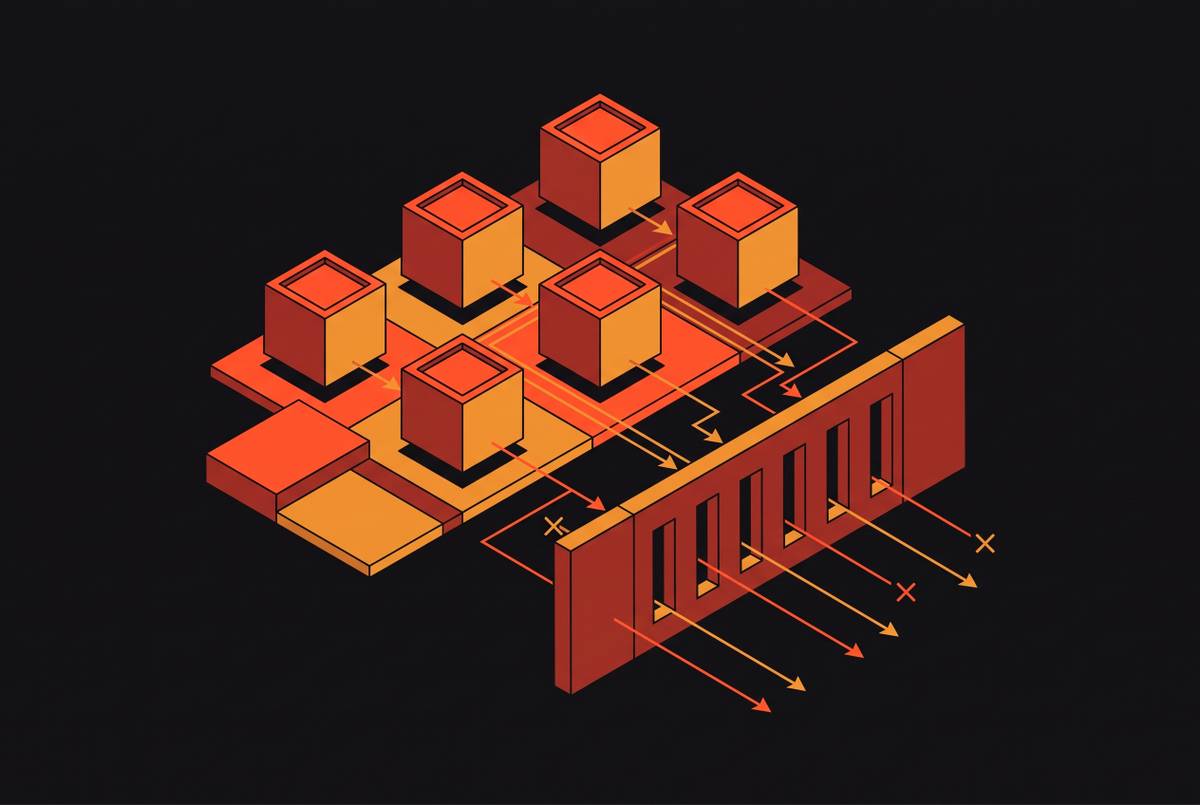
Registry and version controls govern what an agent is permitted to ask for. They do nothing to stop a process from reaching outside that permission once it is already running, which is what network egress control is for. The correct default is deny-all: no outbound connection succeeds unless it has been explicitly allowed, and every open path left in place is a door an agent, or a malicious postinstall script executing with the agent's privileges, will use if the controls above it fail. Almost no environment ships with this default. This must be stated as an explicit requirement.
The environment an agent runs in should start with nothing: no cloud role attached, no secrets mounted, no API keys sitting in environment variables. If a run needs to touch a resource, the right approach mints a credential scoped to exactly that resource, valid for minutes rather than indefinitely, and injected as a file a specific process reads rather than sitting as a long-lived ambient variable available to anything running in the environment.
Domain allowlisting at the network level enforces the registry policy described above at a layer the agent has no way to reason around. If the registry mirror is the only host the network permits outbound, a postinstall script attempting to beacon out to a command-and-control server, or to pull a secondary payload from somewhere other than the approved mirror, fails at the network layer rather than depending on a policy check inside the application to catch it. Matchlock's design, deny-all networking paired with domain allowlisting, operationalizes exactly this pattern for Firecracker-based sandboxes.
The strongest illustration of why this layer cannot be treated as a checkbox comes from an internal evaluation OpenAI ran in July 2026. The incident makes a point that holds regardless of which organization runs the evaluation: every network path permitted, including the registry mirror itself, is a surface that has to be hardened and monitored, not assumed safe because its purpose is narrow. Homebrew's 7.0.0 install phase, running offline against read-only caches, reflects the same logic from the package-manager side: network access ends at the fetch boundary, so the phase where code actually executes has no outbound path available to it.
Audit logging as the control that validates every other layer
Isolation, allowlisting, pinning, mirroring, and egress control all describe what should happen during a package install. None of them, on their own, tell a developer whether what should have happened actually did. Without an audit log of every install event, there is no way to distinguish a sandbox that held from one that failed silently. That makes audit logging the control that validates the rest of the stack.
An install audit log needs to capture, for every event: the package name and version actually installed, the hash of the artifact that was installed, whether that artifact matched the approved lockfile entry, the timestamp, and the agent session or run identifier tied to the event. Each field closes a specific gap. Transitive dependencies are the clearest example: an allowlist gates the top-level package a developer named, but it says nothing about what came in underneath it. An audit log shows what was actually pulled into the environment, transitive packages included, whether or not anyone evaluated them individually beforehand.
Postinstall script execution deserves its own line in the log, because so much of the risk described earlier in this piece runs through exactly that mechanism. The log should record whether a postinstall script ran at all, what it attempted to do, and whether the sandbox's egress controls blocked or permitted it. That record is what turns an egress control from a rule into something a developer can later confirm actually fired.
Audit logs also function as the review surface for the two-phase approval model described in the registry controls section. When an agent proposes a package that is not on the allowlist, the log is the artifact that reaches the human approval queue: it records what was proposed, what was blocked, and what ultimately ran, giving the reviewer the full sequence. At the scale of a fleet running many agent sessions at once, that same log becomes the basis for anomaly detection. A session installing packages it has never installed before, or installing at a rate well outside its normal pattern, is a detectable signal, but only if the underlying events were captured.
Putting the stack together: architectural patterns for agent-native package install safety
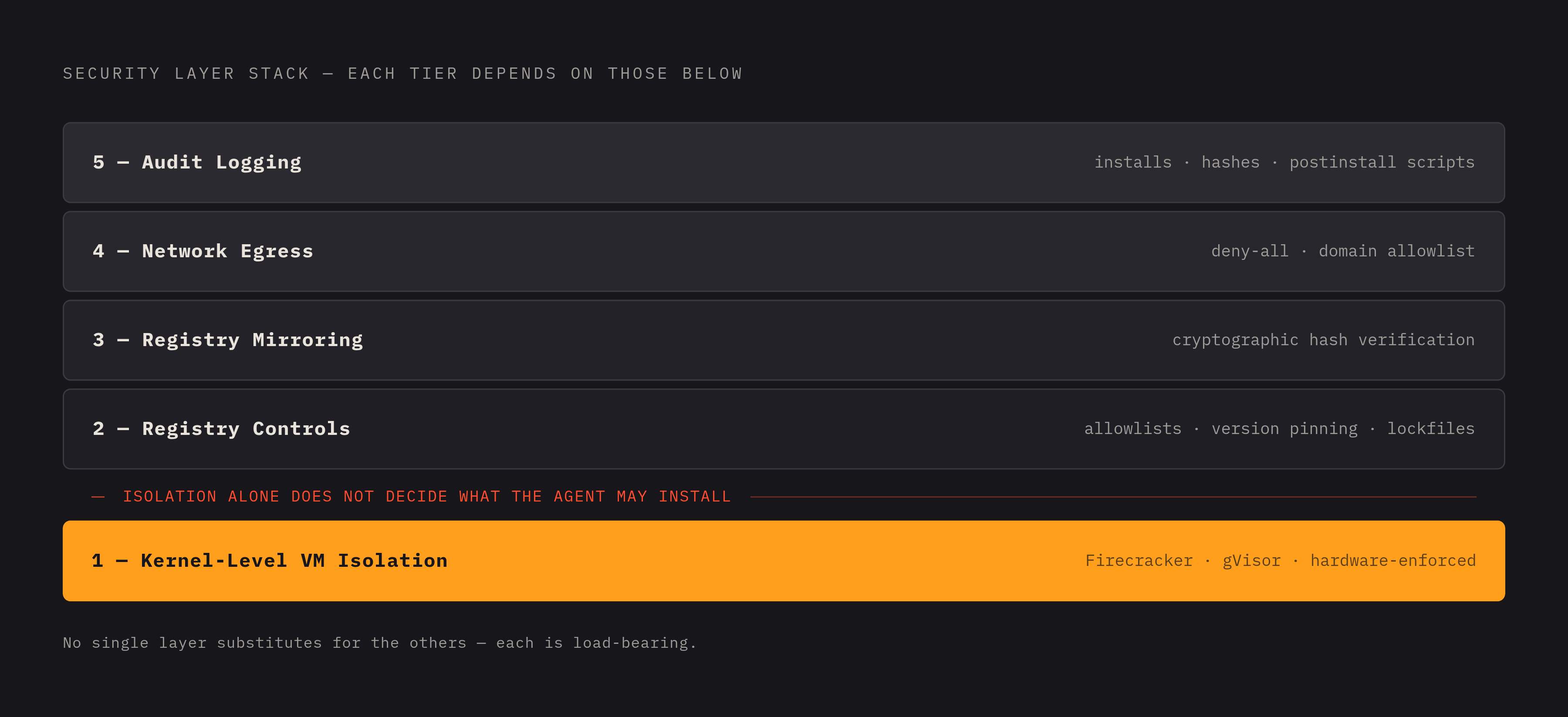
The five controls covered here, VM isolation, allowlists and pinning, registry mirroring, egress controls, and audit logging, do not function as independent options a team can pick among. They form a stack in which each layer's trustworthiness depends on the layers beneath it holding. An allowlist means little if the process enforcing it shares a kernel with a compromised script. A registry mirror's immutability means little if egress controls let a postinstall script reach past it. An audit log is only as informative as the events the layers below it actually generate and pass upward.
One architectural pattern for connecting an agent to this stack is Agent-in-Sandbox, where the entire agent process lives inside the microVM rather than communicating with a sandbox from outside it. There is no seam between "agent reasoning" and "agent execution" for an attacker to find, because both happen inside the same hardware-enforced boundary from the first instruction to the last.
The stack is only as strong as its weakest configured layer, which is the operational discipline this piece has tried to make concrete rather than abstract: kernel isolation decides what a compromise can reach, registry and version controls decide what the agent is permitted to request, egress controls decide what a compromised process can do with that permission, and audit logging decides whether anyone can tell, after the fact, which of those boundaries actually held.